

Is Alcohol-Free Beer Good for You?
Is alcohol-free beer actually good for you? For many people, it can be a healthier alternative to regular beer — particularly when it replaces a drink containing 4–5% alcohol. But “alcohol-free” does not automatically mean calorie-free, sugar-free or healthy.
Alcohol-free beer can be a better choice than regular beer because it dramatically reduces — or completely removes — the alcohol you consume. Many alcohol-free beers are also lower in calories. However, calories, carbohydrates, sugar and ingredients vary between brands, so the individual beer still matters.
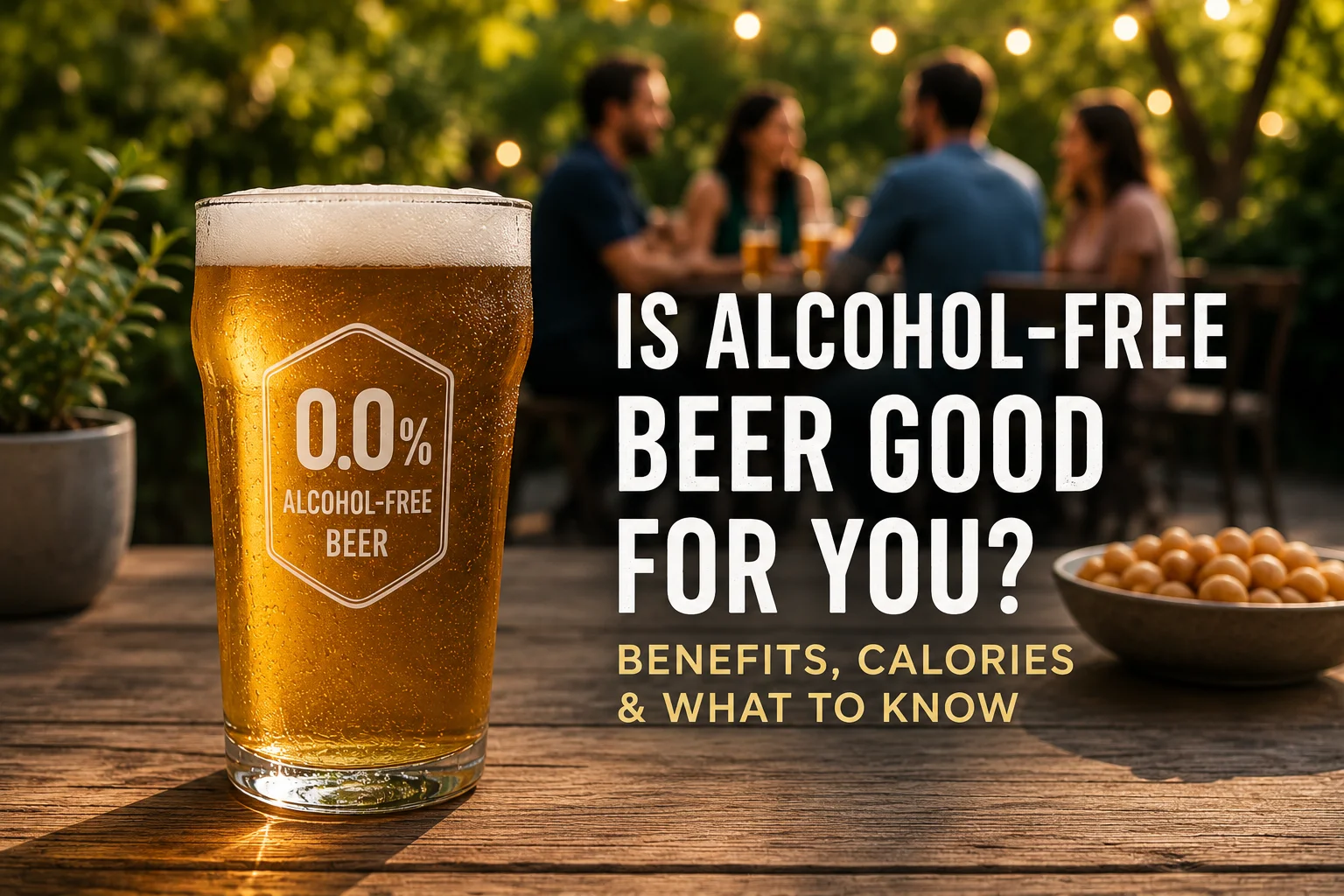
Is alcohol-free beer healthier than regular beer?
For somebody trying to reduce their alcohol intake, switching from regular beer to an alcohol-free alternative can make a significant difference.
The biggest reason is simple: you are removing most or all of the alcohol.
UK health guidance recommends keeping regular alcohol consumption within 14 units per week. Choosing lower-strength or alcohol-free drinks is one of the practical ways people can reduce their intake.
- Little or no alcohol
- Often fewer calories than regular beer
- No alcohol-related intoxication from genuine 0.0% beer
- A way to keep the social ritual of having a beer while drinking less
- A growing choice of vegan, gluten-free and lower-calorie products
That does not mean every alcohol-free beer is a health drink. Some contain meaningful amounts of sugar or carbohydrates, and nutritional values can differ considerably between brands.
What are the main benefits of alcohol-free beer?
1. You can dramatically reduce your alcohol intake
This is the clearest advantage.
A pint of 5% beer contains roughly 2.8 units of alcohol. If you replace it with a genuine 0.0% beer, the alcohol contribution from that drink effectively disappears.
Even beers at 0.5% ABV contain only a fraction of the alcohol found in conventional beer.
2. Alcohol-free beer can be lower in calories
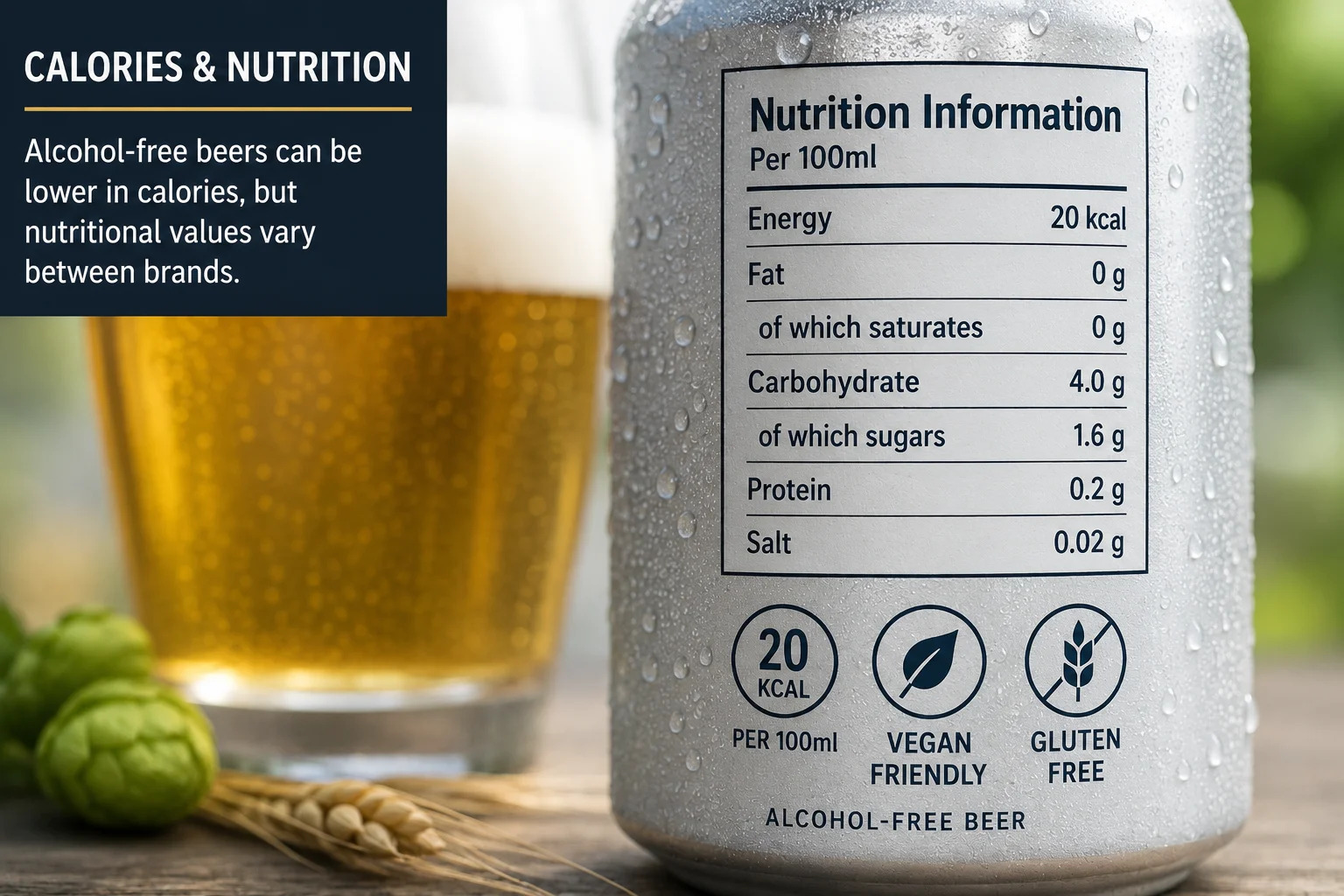
Alcohol contains around 7 calories per gram, so taking most or all of the alcohol out of beer can significantly reduce its calorie content.
But the range is wider than many people realise.
| Beer reviewed by MyDryBar | ABV | Calories / 100ml | Approx. / 330ml | Review |
|---|---|---|---|---|
| Budweiser Zero | 0.0% | 14 kcal | 46 kcal | Read review → |
| Madrí Excepcional 0.0 | 0.0% | 20 kcal | 66 kcal | Read review → |
| Collider Lager | 0.5% | 45 kcal | 149 kcal | Read review → |
This is why it is better to compare the actual product than assume that every alcohol-free beer is automatically “low calorie”. If calorie intake is important to you, explore our guide to the best low-calorie alcohol-free beers.
3. You avoid the intoxicating effects of alcohol
Alcohol affects coordination, judgement and reaction time. It can also contribute to poor sleep, dehydration and the decidedly less enjoyable effects of a hangover.
A genuine 0.0% beer removes alcohol from that equation.
There is also a lifestyle benefit that does not appear on a nutrition label. You can still enjoy a cold beer with dinner, meet friends in a pub or watch the football with a beer in your hand without necessarily consuming alcohol.

Lucky Saint Lager
0.5% ABV. Crisp, balanced and one of the strongest alcohol-free lagers in the MyDryBar database.
Lucky Saint Hazy IPA
Juicy tropical and citrus character with a soft mouthfeel and strong IPA credentials.
Guinness 0.0
A convincing 0.0% stout with the roasted character and creamy texture people expect from Guinness.
Does alcohol-free beer contain alcohol?
Sometimes. This is one of the most misunderstood parts of the category.
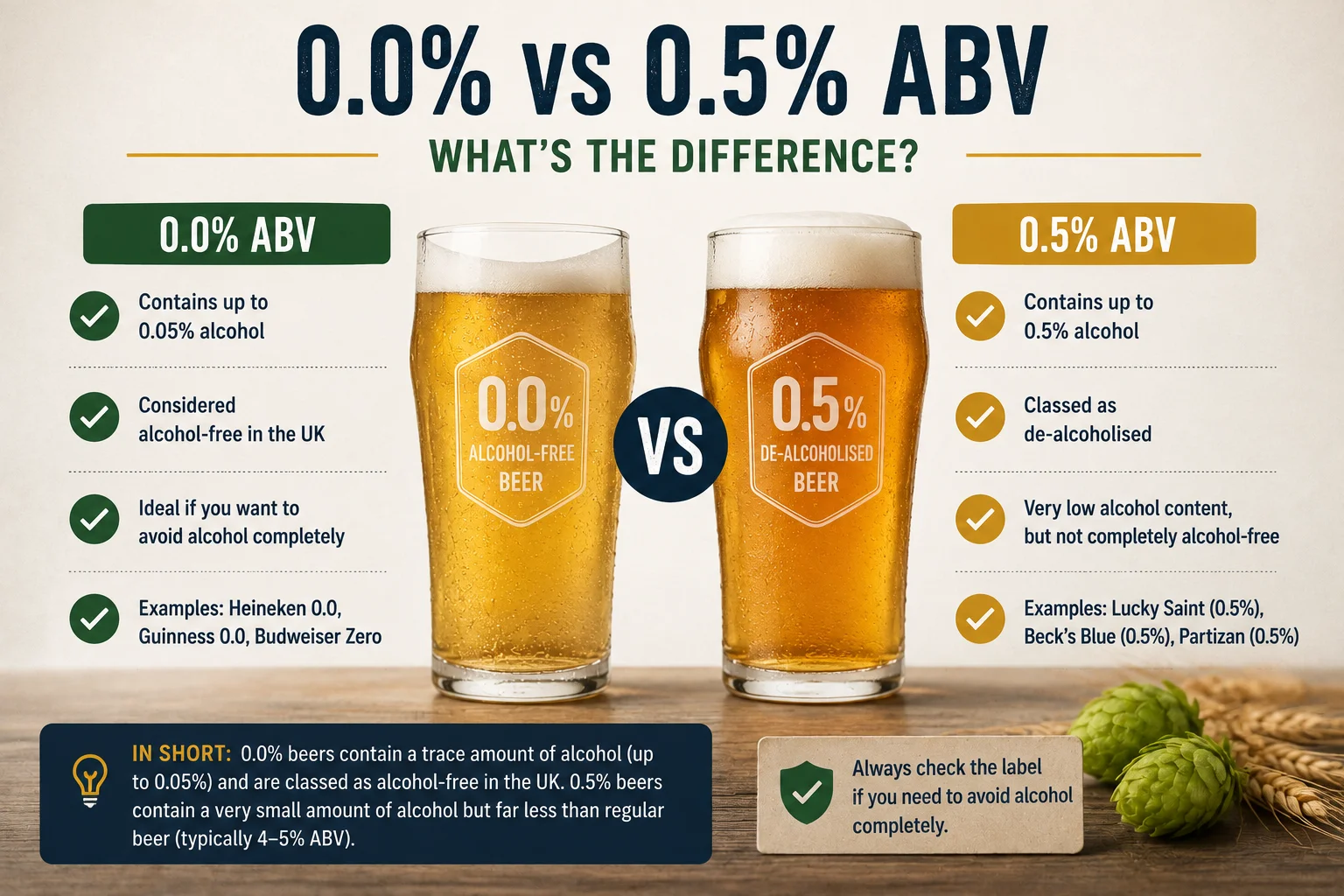
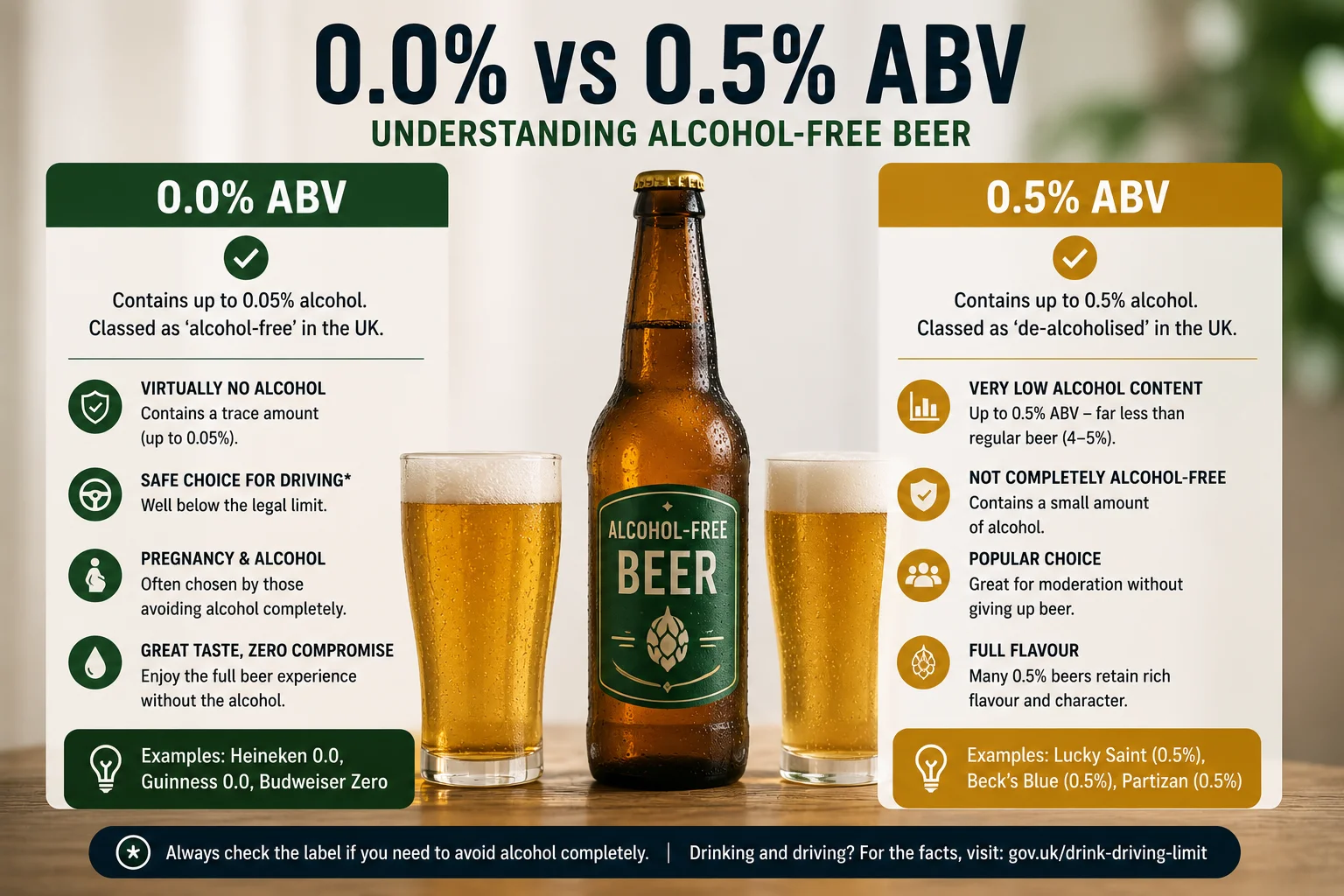
Current UK government guidance distinguishes between drinks described as alcohol-free, de-alcoholised and low alcohol. Products sold in the UK can also be produced and labelled under rules from other markets, which is why you will see both 0.0% and products containing small residual amounts of alcohol.
If completely avoiding alcohol matters to you, the safest approach is straightforward: check the ABV shown on the can or bottle.
For example, Heineken 0.0, Madrí Excepcional 0.0 and Guinness 0.0 are 0.0% products, while Lucky Saint Lager is 0.5% ABV.
Does alcohol-free beer have fewer calories than normal beer?
Often, yes. Alcohol itself is calorie-dense, so removing it can create a substantial saving.
However, brewers still need to create body, flavour and balance. Depending on the recipe and brewing method, the finished beer may contain residual carbohydrates and sugars.
That means two beers with the same ABV can have very different nutritional profiles.
So if weight management is one reason you are switching, look at ABV + calories + sugar, rather than ABV alone.
Does alcohol-free beer have sugar in it?
It can.
Beer starts with grains such as barley or wheat. During brewing, starches from those grains are converted into sugars. Depending on the brewing process, some sugars can remain in the finished drink.
Different producers also formulate their beers differently to replace some of the body and flavour normally contributed by alcohol.
So alcohol-free beer should not automatically be treated as a sugar-free drink. If sugar intake is important to you, check the nutritional information for the individual product.
Does alcohol-free beer make you gain weight?
No individual food or drink automatically causes weight gain. Weight changes are influenced by your overall energy intake and expenditure.
Alcohol-free beer still contains calories, but replacing a higher-calorie alcoholic beer with a lower-calorie alternative can reduce your overall intake.
Replace two 180-calorie alcoholic beers with two 60-calorie alcohol-free beers and you have cut roughly 240 calories from that occasion.
If you make that substitution regularly, the difference can become meaningful.
Is alcohol-free beer hydrating?
It is better to think of alcohol-free beer as a drink that contributes fluid rather than a specialist hydration product.
Regular alcoholic beer is not ideal for hydration because alcohol can increase urine production. Remove the alcohol and you remove that particular issue.
Alcohol-free beer is predominantly water, so it contributes to fluid intake. But if you are specifically trying to rehydrate — after exercise, for example — plain water remains the obvious choice.

Is alcohol-free beer good for your gut?
This is an interesting area, but it is also one where online claims can get ahead of the evidence. If gut health is your main priority, explore our dedicated guide to alcohol-free drinks for gut health.
Beer contains compounds derived from barley, hops and fermentation, including polyphenols, and researchers continue to investigate how these may interact with the gut microbiome.
That is not the same thing as saying alcohol-free beer is a “gut health drink”.
If you are choosing between regular beer and an alcohol-free version, the clearest difference is still the removal or major reduction of alcohol. Any additional nutritional benefits should be treated as a potential bonus rather than a reason to drink alcohol-free beer medicinally.
Is alcohol-free beer good for your heart?
Be cautious with claims that any type of beer is “good for your heart”.
Alcohol-free beer contains compounds from ingredients such as hops and grains, but that does not make it a cardiovascular health product.
The much stronger health argument for choosing an alcohol-free beer instead of conventional beer is simply that you are reducing or eliminating the alcohol.
Is alcohol-free beer healthier than a soft drink?
It depends entirely on what you are comparing.
| If you’re replacing… | What to consider |
|---|---|
| Regular beer | Alcohol-free beer can substantially reduce alcohol and often calories. |
| Full-sugar soft drink | Some alcohol-free beers may contain fewer calories or less sugar — check the label. |
| Zero-calorie soft drink | The nutritional comparison becomes less obvious. |
| Water | For pure hydration, water remains the simplest choice. |
Are all alcohol-free beers healthy?
No. “Alcohol-free” describes the alcohol content; it is not a health certification.
Products differ in:
- Calories
- Carbohydrates
- Sugar
- Ingredients
- Gluten content
- Whether they are 0.0% or contain a small amount of alcohol
That’s why MyDryBar includes nutrition and dietary information wherever it is available alongside our independent scores.
If gluten is important to you, see our best gluten-free alcohol-free beers. If calories are the priority, start with our low-calorie alcohol-free beer guide.
So, is alcohol-free beer actually good for you?
Alcohol-free beer can be a better choice than regular beer if it helps you reduce the amount of alcohol you drink. Depending on the product, you may also consume fewer calories and avoid the intoxicating effects associated with alcohol. But it is still worth comparing calories, sugar, ingredients and ABV rather than assuming every alcohol-free beer is automatically healthy.
Our advice is simple: choose alcohol-free beer because you enjoy beer and want to drink less alcohol — then compare the nutritional information if calories, sugar or dietary requirements matter to you.
Fortunately, the choice is now far better than it used to be. Explore our alcohol-free beer reviews, including lagers, IPAs, pale ales, wheat beers and stouts, all scored independently by MyDryBar.
🍺 Not sure which alcohol-free beer to try?
Tell the MyDryBar Drink Selector what you like and use our review data to narrow down the drinks that best match your preferences.
Frequently asked questions
Is it OK to drink alcohol-free beer every day?
For most adults, alcohol-free beer can fit into a normal diet, but calories, sugar and ingredients still matter if you drink it frequently. If you need to avoid alcohol completely, check the ABV because not every drink in the wider no/low category is 0.0%.
Is 0.0% beer healthier than normal beer?
If you’re replacing alcoholic beer with 0.0% beer, you are removing the alcohol contained in that drink. Many 0.0% beers are also lower in calories, although nutritional values vary by brand.
Does alcohol-free beer have lots of sugar?
Not necessarily. Sugar content varies considerably according to the beer and the brewing process. Check the nutritional information rather than assuming alcohol-free beer is automatically high or low in sugar.
Can alcohol-free beer get you drunk?
A genuine 0.0% beer does not contain alcohol at a level that would intoxicate you. Products containing a small residual amount, such as 0.5% ABV beer, contain dramatically less alcohol than conventional beer. If complete avoidance matters to you, choose 0.0% and check the packaging.
Is alcohol-free beer good for weight loss?
It is not a weight-loss product, but replacing higher-calorie alcoholic beer with a lower-calorie alcohol-free option can reduce your total calorie intake. The calorie content varies significantly between products.
What’s the healthiest alcohol-free beer?
There is no single universally healthiest beer. It depends on whether your priority is 0.0% ABV, low calories, low sugar, gluten-free ingredients or something else. Use the MyDryBar Drink Selector and our beer reviews to compare options.
Useful health information: For current UK alcohol guidance, see the NHS and UK Government. MyDryBar is an independent drinks review site and does not provide medical advice.
About MyDryBar: MyDryBar has independently reviewed alcohol-free drinks since 2020. Our reviews are based on tasting notes, drink quality, value and overall alcohol-free credibility. Nutritional information can change, so always check the current packaging if you have specific dietary or medical requirements.