

Best Alcohol-Free Wines UK 2026
Independent alcohol-free wine guide • Updated August 2026
Best Alcohol-Free Wines UK 2026: The Bottles Actually Worth Drinking
Alcohol-free wine has improved enormously, but it is still one of the most inconsistent parts of the no-alcohol drinks market. Some bottles genuinely give you the acidity, fruit, dryness and occasion of wine. Others still taste suspiciously like expensive grape juice.
That is why this guide is based on wines actually reviewed by MyDryBar, rather than a collection of bottles chosen from retailer descriptions. I have been reviewing alcohol-free drinks for years and MyDryBar now covers more than 300 drinks, including 30+ wines. Every wine is independently scored for flavour, balance, mouthfeel, authenticity and value.
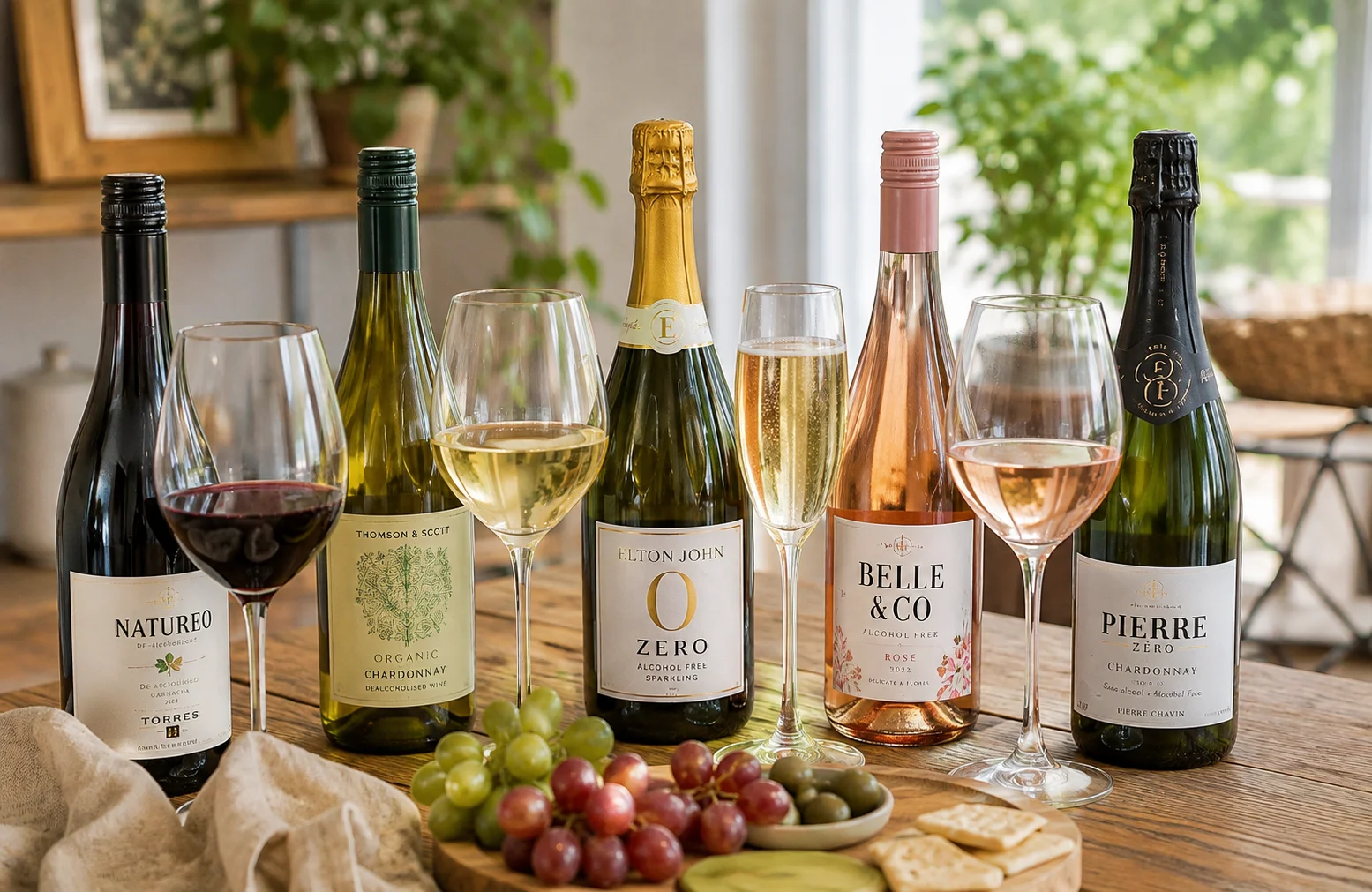
The best alcohol-free wines at a glance
| Wine | Best for | Style | ABV | MDB score |
|---|---|---|---|---|
| Elton John Zero | Best overall | Sparkling white | 0% | 75/100 |
| Belle & Co Sparkling Rosé | Best rosé | Sparkling rosé | 0.0% | 75/100 |
| Château del ISH | Best premium sparkling | Sparkling white | 0.0% | 74/100 |
| Vinada Sparkling Chardonnay | Best Chardonnay-style option | Sparkling white | 0.0% | 72/100 |
| Cimicky Zero | Best red reviewed | Sparkling red | 0.0% | 73/100 |
| Wolf Blass Zero Shiraz | Best mainstream still red | Red | 0.5% | 69/100 |
| Vina Sol Familia Torres | Still white pick | White | 0.0% | 70/100 |
| Carl Jung Sparkling Wine | Good dry sparkling option | Sparkling white | 0.5% | 70/100 |
Scores reflect MyDryBar’s independent reviews and database as of August 2026. Product recipes, ABV and availability can change, so check the current bottle label when purchasing.
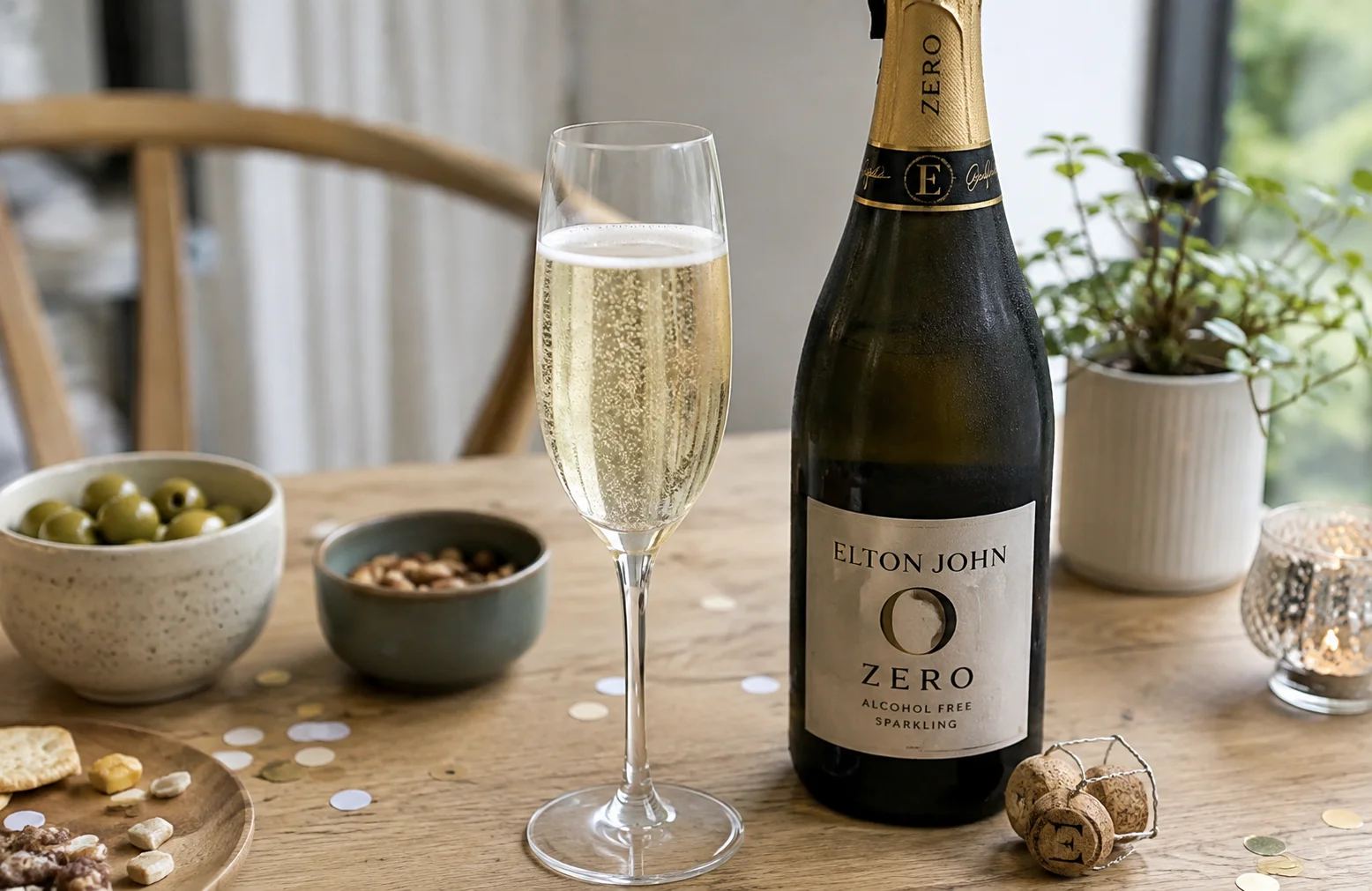
1. Elton John Zero — Best alcohol-free wine overall
Why it wins
Elton John Zero sits at the top of the current MyDryBar wine rankings. More importantly, it demonstrates why sparkling wine is currently the safest place to start if you want a convincing alcohol-free wine experience.
The bubbles add texture and lift, helping compensate for the body that disappears when alcohol is removed. That makes a good sparkling zero feel more grown-up and wine-like than many still alternatives.
Best for: celebrations, aperitifs, dinner parties and anyone buying their first bottle of alcohol-free wine.
2. Belle & Co Sparkling Rosé — Best alcohol-free rosé
Belle & Co is one of the strongest wines I have reviewed and a particularly good choice if you want something lighter and fruitier than a dry sparkling white.
It has enough flavour and refreshment to work as a proper adult drink, while the carbonation again provides some of the structure often missing from dealcoholised still wines.
Best for: summer drinking, parties, brunch, celebrations and people who normally choose rosé or Prosecco.
3. Château del ISH — Best premium sparkling choice
Château del ISH is another of the highest-scoring sparkling wines in the MyDryBar database. It is a useful bottle for anyone who has previously tried a cheap alcohol-free wine and concluded that the entire category is hopeless.
The better alcohol-free sparkling wines are increasingly capable of delivering acidity, fruit and texture without simply replacing alcohol with sweetness.
Best for: a more premium-feeling bottle, entertaining or replacing sparkling wine at a special occasion.
4. Vinada Sparkling Chardonnay — Best Chardonnay-style option
Vinada’s Sparkling Chardonnay remains one of the better alcohol-free sparkling wines I have tried. It manages to retain enough of the fruity and wine-like character to make it feel like a genuine alternative rather than a fizzy soft drink in a wine bottle.
At around 18 calories per 100ml in the version reviewed by MyDryBar, it also demonstrates one of the attractions of switching from conventional wine: alcohol-free versions can be considerably lighter.
Best for: Chardonnay drinkers, lighter drinking and people looking for a 0.0% bottle.
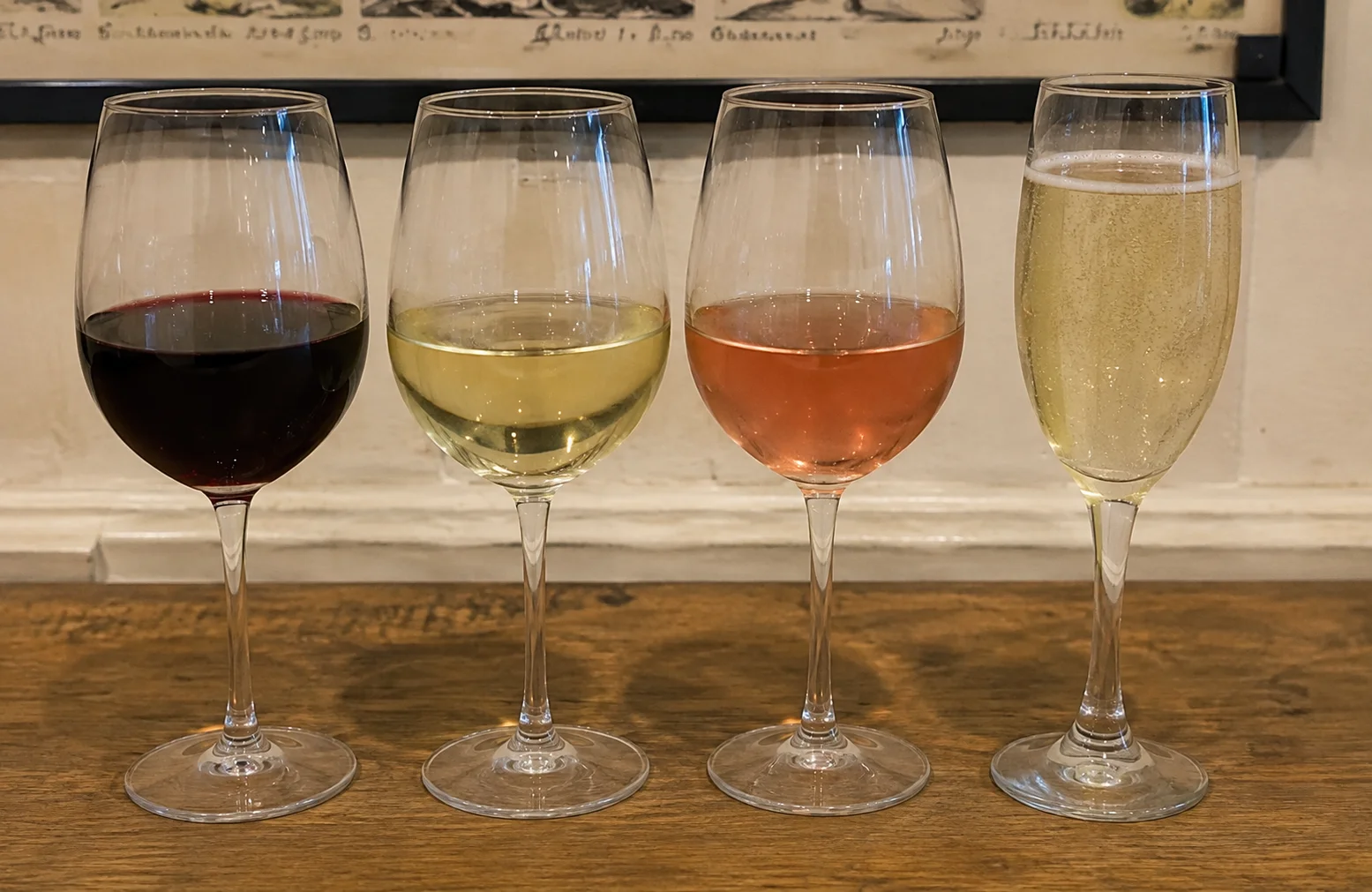
5. Cimicky Zero — Best alcohol-free red reviewed
Red wine is where alcohol-free producers have the biggest problem. Alcohol contributes a huge amount to the body, warmth and structure we associate with red wine, and removing it can leave a drink thin, sour or overly fruity.
Cimicky Zero is unusual. I found it sweet and closer to a cordial than a conventional red wine, but it was also genuinely enjoyable — and that matters. It currently sits well above many of the alcohol-free reds I have reviewed.
Best for: someone who wants a fruity red alternative and is happy to sacrifice some traditional red-wine character for drinkability.
6. Wolf Blass Zero Shiraz — Best mainstream still red
Wolf Blass Zero Shiraz is one of the more recent reds to enter the MyDryBar database and scores 69/100. That might not sound spectacular next to the site’s best beers and spirits, but context is important: alcohol-free red wine is a difficult category and the average red score on MyDryBar is considerably lower.
If you specifically want a recognisable still red rather than sparkling wine, this is one of the more interesting mainstream bottles in the current rankings.
Best for: Shiraz drinkers and anyone determined to find a still alcohol-free red.
7. Vina Sol Familia Torres — A strong still white option
Still white wine is another category where results vary dramatically, but Vina Sol Familia Torres reached 70/100 in the latest MyDryBar rankings. That makes it one of the stronger options for drinkers who do not want bubbles.
With still alcohol-free wine, balance is everything. Too little acidity and it can become sweet grape juice; too much and it becomes sharp. Better examples retain freshness without losing their wine-like character.
Best for: white-wine drinkers looking for a still 0.0% alternative.
8. Carl Jung Sparkling Wine — Best for a drier palate
Carl Jung’s sparkling wine scored 70/100 and reminded me of a dry Prosecco. The crisp character, peach and apple notes and well-judged carbonation make it a useful choice for people who find some alcohol-free wines far too sweet.
Best for: Prosecco drinkers and anyone who prefers a drier, crisper style.
Not sure which alcohol-free wine suits you?
Use the MyDryBar Drink Selector to compare alcohol-free drinks by style, score and preference.
Why is good alcohol-free wine so difficult to make?
Wine is arguably harder to recreate without alcohol than beer. Alcohol does more than make wine alcoholic: it contributes weight, mouthfeel, aroma, warmth and the way flavours linger after each sip.
Most dealcoholised wines begin life much like conventional wine. The alcohol is then removed using techniques such as vacuum distillation or spinning-cone technology. The challenge is retaining the desirable aromas and flavours while removing the ethanol.
Take too much character away and the result can feel watery. Add too much sweetness to compensate and it starts tasting like grape juice. This is why I look particularly closely at balance, body, acidity, aroma and drinkability when reviewing alcohol-free wine.
Sparkling vs white vs red: where should you start?
🥂 Sparkling wine — currently the safest bet
This is the strongest alcohol-free wine category in the MyDryBar database. Carbonation adds texture and freshness, while crisp acidity works naturally in a sparkling drink. If you are serving alcohol-free wine to guests, this is where I would start.
See MyDryBar’s best alcohol-free sparkling wines →
🥂 White wine — improving, but choose carefully
Crisp fruit and acidity can translate well into alcohol-free whites, but cheaper examples can become excessively sweet. Chardonnay and other aromatic styles can work particularly well when producers retain enough character.
See the best alcohol-free white wines →
🍷 Red wine — still the toughest category
Removing alcohol exposes the lack of body very quickly in red wine. Some bottles become thin, sour or juice-like. There are improving options, but I would strongly recommend checking independent reviews before buying.
See the best alcohol-free red wines →
🌸 Rosé — particularly good when sparkling
Rosé can work nicely without alcohol because fruit, freshness and acidity are already central to the style. My highest-rated rosé options are sparkling, where the bubbles provide additional texture.
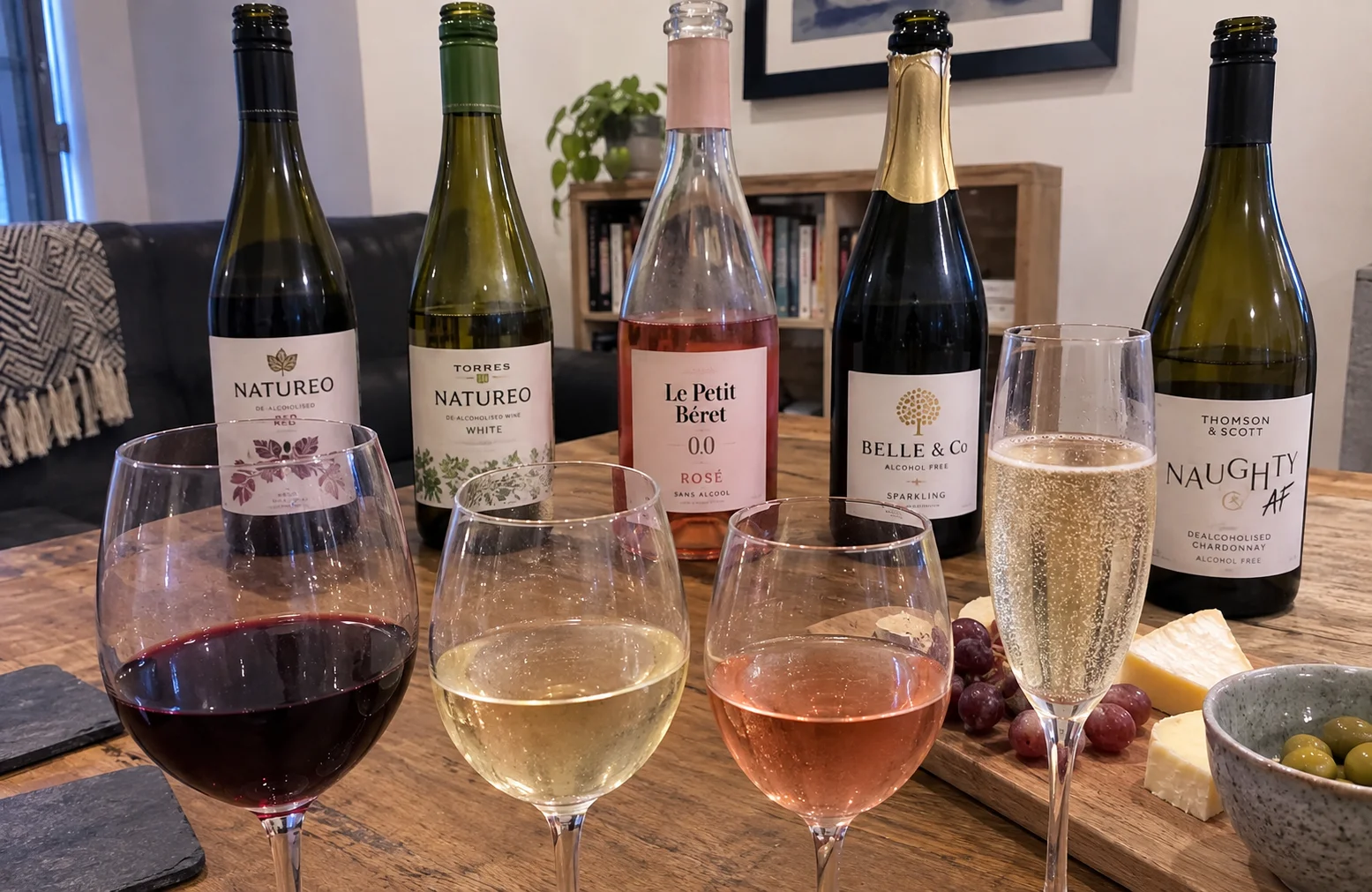
How I score alcohol-free wine
I am not looking for laboratory perfection. The key question is simple: would I actually want another glass?
MyDryBar reviews consider flavour, aroma, appearance, balance, mouthfeel, authenticity, value and overall drinkability. The score is designed to make it easier to compare bottles across the site, but I also explain where a drink works and where it falls short.
That distinction matters with alcohol-free wine. A bottle can fail to perfectly imitate conventional wine yet still be an enjoyable drink. Equally, a beautifully presented 0.0% wine is not automatically worth buying if the liquid tastes thin or overly sweet.
What should you look for when buying alcohol-free wine?
Check the ABV. ‘Alcohol-free’ does not always mean precisely 0.0%. Some products contain up to 0.5% ABV, so check the bottle if complete avoidance is important to you.
Start with your normal wine preference. If you normally drink dry white wine, buying a very sweet alcohol-free rosé simply because it has a good review is unlikely to work for you.
Don’t assume expensive means better. Dealcoholisation technology and recipe balance matter more than an impressive label.
Look at calories and sugar if they matter to you. Removing alcohol can dramatically reduce calories, but producers sometimes use sugar or grape must to rebuild flavour and body.
Use independent tasting notes. Alcohol-free wine varies more in quality than most drinks categories, so a little research can save you from a disappointing bottle.
Are alcohol-free wines lower in calories?
Often, yes. Alcohol contains around seven calories per gram, so removing most or all of it can significantly reduce the calorie content of wine. For example, the Vinada Sparkling Chardonnay reviewed by MyDryBar contains around 18 kcal per 100ml, while some other alcohol-free wines sit higher depending on their sugar content.
Lower alcohol does not automatically mean low sugar, however. Always check the nutrition label if calories or sugar are a priority.
Coming next on MyDryBar: a detailed guide to alcohol-free wine calories, sugar and health.
Where to buy alcohol-free wine in the UK
The UK selection is now considerably better than it was a few years ago. Supermarkets stock an increasing number of 0.0% and low-alcohol wines, while specialist alcohol-free retailers tend to offer a much broader range.
MyDryBar wine reviews include buying options where available, and the main alcohol-free wine hub lets you compare the current top-rated bottles before buying.
🏆 MyDryBar verdict
The best alcohol-free wines are now genuinely worth drinking — but choose carefully.
My biggest recommendation is to start with sparkling wine. Elton John Zero, Belle & Co, Château del ISH and Vinada demonstrate how much better the category has become. Still whites are beginning to catch up, while reds remain the area where I would be most cautious.
The encouraging thing is that the quality gap is closing. A few years ago the question was whether alcohol-free wine could ever taste convincing. In 2026, the more useful question is becoming: which bottle should I buy?
Frequently asked questions
What is the best alcohol-free wine in the UK?
Based on the current MyDryBar rankings, Elton John Zero, Belle & Co Sparkling Rosé and other leading sparkling wines are among the highest-scoring options, reaching 75/100. The best choice for you will depend on whether you prefer sparkling, white, red or rosé.
Does alcohol-free wine actually taste like wine?
The best examples do retain recognisable wine characteristics, but removing alcohol changes body, aroma and finish. Sparkling wines currently tend to reproduce the overall wine experience more successfully than many still reds.
Is 0.5% wine really alcohol-free?
Some products marketed within the alcohol-free or non-alcoholic category contain a very small amount of alcohol, commonly up to 0.5% ABV. Others are labelled 0.0%. Always check the individual label if avoiding alcohol completely is important.
Why does some alcohol-free wine taste sweet?
Alcohol gives conventional wine body and carries flavour. After it is removed, producers may use grape must or sugar to restore balance and mouthfeel. If this is overdone, the wine can taste more like grape juice.
What is the best type of alcohol-free wine for beginners?
Sparkling wine is the easiest place to start. Bubbles create texture and freshness and help replace some of the mouthfeel lost when alcohol is removed.
Is alcohol-free wine lower in calories than normal wine?
It usually is because alcohol itself is calorie-dense. The exact saving varies according to the wine’s sugar content, so compare nutrition labels rather than assuming every 0.0% bottle is very low calorie.
Explore all MyDryBar wine reviews
Compare independent scores, styles, ABV and tasting notes across the full alcohol-free wine database.
Editorial note: MyDryBar independently reviews and scores alcohol-free drinks. Some retailer links may be affiliate links, which can earn MyDryBar a small commission at no additional cost to you. Scores and product details were checked against the MyDryBar database in August 2026.