

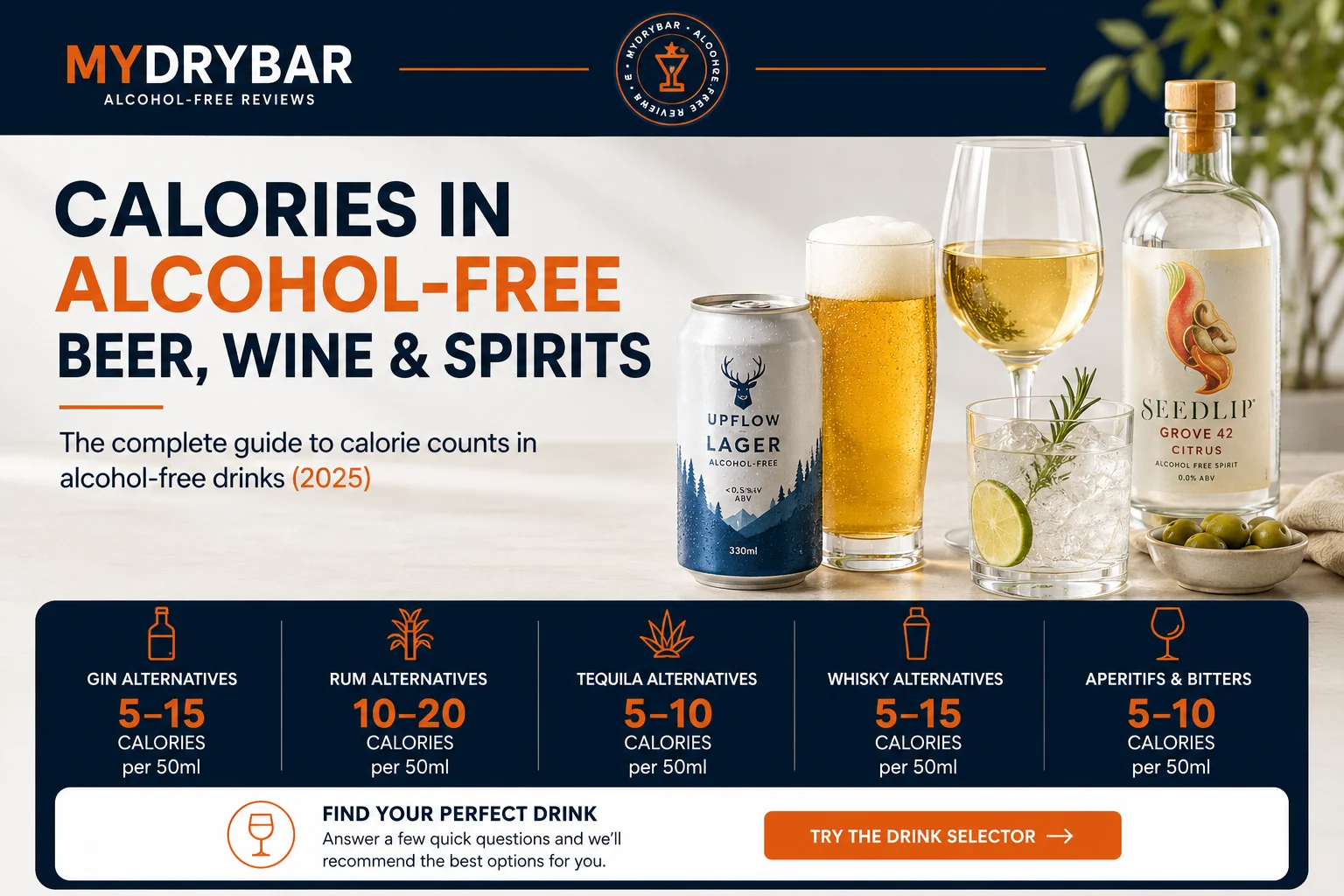
How Many Calories Are in Alcohol-Free Beer, Wine and Spirits?
How Many Calories Are in Alcohol-Free Beer, Wine and Spirits?
Cutting back on alcohol is one of the most common reasons people search for alcohol-free drinks — but “healthier” isn’t always the same as “lower calorie”, and the gap between categories is bigger than most people expect.
Typical calorie reduction
⚡ The short answer
Alcohol itself is calorie-dense — around 7 kcal per gram, almost as much as fat. Strip it out, and you strip out most (though not all) of a drink’s calories. But how much you save depends heavily on which category you’re in:
| Drink | Regular (standard serving) | Alcohol-free (standard serving) | Typical reduction |
|---|---|---|---|
| Beer (330ml) | 130–220 kcal | 16–90 kcal | 50–90% |
| Wine (125ml glass) | 85–130 kcal | 15–35 kcal | 65–85% |
| Spirits (25ml single) | 50–56 kcal | 3–25 kcal | 55–95% |
Spirits show the widest range on the alcohol-free side — a plain 0.0% gin can come in at around 3 kcal per 25ml, while a botanical, ingredient-led alcohol-free spirit designed to taste more complex can sit closer to 20–25 kcal for the same measure. Beer shows the opposite pattern: even the leanest 0.0% lagers rarely drop much below 16 kcal per can, because some of a beer’s calories come from unfermented grain sugars, not just alcohol.
🍺 Beer: alcohol-free vs regular
A standard 5% ABV lager typically contains somewhere between 130 and 220 kcal per 330ml serving, depending on style and exact ABV. Alcohol-free beer (0.0%–0.5%) is a genuine step down, but the range is wide:
Why two 0.0% beers can differ so much: beers made using “arrested fermentation” tend to retain more residual sugar — and therefore more calories — than beers made using vacuum distillation or reverse osmosis. Two 0.0% beers with identical ABV can have meaningfully different calorie counts depending on how they were made.
Some MyDryBar beer reviews worth a look if you’re comparing calories directly:
🍷 Wine: alcohol-free vs regular
This is where the biggest percentage drop tends to happen. A regular 125ml glass of wine generally sits between 85 and 130 kcal, with sparkling wine and sweeter styles toward the higher end. Alcohol-free wine typically comes in at 15–35 kcal for the same serving — often a 65–85% reduction.
Alcohol-free wine usually contains more natural sugar and carbohydrate than its alcoholic counterpart, gram for gram. The grape sugars that would normally convert into alcohol during fermentation are instead preserved — so what you lose in alcohol, you partly gain back in residual sweetness. It’s still a large net calorie saving, but “alcohol-free” and “low-sugar” aren’t automatically the same thing.
See how this plays out in a real bottle:
🥃 Spirits: alcohol-free vs regular
Spirits show the most dramatic reduction of any category, but also the widest spread on the alcohol-free side. A standard 25ml UK single measure of a regular 40% ABV spirit contains roughly 50–56 kcal, almost entirely from the alcohol itself.
Strip the alcohol out and there’s very little base calorie content left — which is why a plain 0.0% gin can come in as low as 3–6 kcal per 25ml. But many alcohol-free spirits are built around botanical extracts or small amounts of added sugar to recreate the mouthfeel alcohol normally provides, and these can land anywhere from 15 to 25 kcal per 25ml. Neither figure is “wrong” — they’re different products solving the same problem in different ways.
💡 The bit most calorie comparisons miss
None of this accounts for what you mix your drink with. A gin and tonic’s calorie count is dominated by the tonic water, not the gin — swap a regular tonic for a slimline or sugar-free version and you’ll often save more than switching from a regular to an alcohol-free spirit in the first place. If you’re tracking calories seriously, what’s around the alcohol-free drink usually matters as much as the drink itself.
❓ Quick answers
Calorie figures above are typical ranges compiled from published nutritional data and industry sources, not measurements of specific products. Always check the label of the exact drink you’re having — brand, style and batch can all shift the numbers.